


Fine wire drawing machines are essential pieces of equipment in the metalworking industry, particularly for manufacturing thin wires with high precision and quality. As a reputable fine wire drawing machine supplier, we understand the importance of these machines' components and their impact on the overall performance. In this blog post, I will delve into the main components of a fine wire drawing machine and explain how they work together to produce high - quality fine wires.
Pay - off Unit
The pay - off unit is the starting point of the wire drawing process. Its primary function is to hold the wire rod or coil and provide a continuous and controlled supply of wire to the drawing dies. There are two main types of pay - off units: passive and active.
Passive pay - off units rely on the pulling force of the drawing machine to unwind the wire. They are relatively simple and cost - effective, but they may have limitations in terms of speed and tension control. Active pay - off units, on the other hand, use motors to actively control the unwinding speed and tension of the wire. This allows for more precise control, especially when dealing with high - speed drawing operations or delicate wire materials. By maintaining a consistent tension on the wire during pay - off, we ensure that the wire enters the drawing dies smoothly, reducing the risk of wire breakage and improving the overall quality of the drawn wire.
Drawing Dies
Drawing dies are the heart of any wire drawing machine. These are precision - engineered tools made from materials such as tungsten carbide, diamond, or ceramics, depending on the type of wire being drawn and the required finish. The primary function of the drawing dies is to reduce the cross - sectional area of the wire while increasing its length.
Drawing dies have a conical shape with a precisely sized opening. As the wire passes through the die, the die exerts a compressive force on the wire, causing it to deform plastically. Each die in a multi - die drawing machine is designed to reduce the wire diameter by a specific amount. By using a series of dies with progressively smaller diameters, we can achieve the desired final wire size. For example, if you are starting with a relatively thick wire rod and want to produce a very fine wire, you will need a set of dies that gradually reduce the diameter in small increments.
The quality and design of the drawing dies have a significant impact on the surface finish, dimensional accuracy, and mechanical properties of the drawn wire. High - quality dies ensure a smooth surface finish, minimize the risk of wire breakage, and maintain the required tolerances. At our company, we source the best - quality drawing dies for our fine wire drawing machines to ensure optimal performance.
Capstan System
The capstan system plays a crucial role in controlling the speed and tension of the wire during the drawing process. Capstans are large, cylindrical drums around which the wire is wrapped. They are driven by motors and are responsible for pulling the wire through the drawing dies.
The capstan system is designed to provide a constant and uniform tension on the wire as it moves through the machine. By adjusting the speed of the capstans, we can control the drawing speed and ensure that the wire is drawn at the appropriate rate. In a multi - die drawing machine, there are usually multiple capstans, each corresponding to a specific set of drawing dies. The speed of each capstan is carefully coordinated to maintain the proper tension between the dies and prevent the wire from slipping or breaking.
For example, if the tension is too high, it can lead to wire breakage, while low tension can result in uneven drawing and poor surface finish. Our fine wire drawing machines are equipped with advanced capstan systems that can be precisely adjusted to meet the specific requirements of different wire materials and drawing processes.
Lubrication System
The lubrication system is essential for reducing friction between the wire and the drawing dies. During the wire drawing process, a significant amount of heat is generated due to friction. Excessive heat can damage the drawing dies, reduce the surface quality of the wire, and even cause the wire to stick to the dies.
The lubrication system supplies a lubricant, such as oil or emulsion, to the drawing dies and the wire. The lubricant forms a thin film between the wire and the die, reducing friction and heat generation. This not only extends the life of the drawing dies but also improves the surface finish of the wire.
There are different types of lubrication systems, including flooded lubrication and spray lubrication. Flooded lubrication involves immersing the drawing dies and the wire in a bath of lubricant, while spray lubrication uses nozzles to spray the lubricant directly onto the wire and the dies. Our fine wire drawing machines can be equipped with the appropriate lubrication system based on the specific requirements of the wire drawing process, whether it's for high - speed drawing or for drawing delicate and high - quality wires.
Take - up Unit
The take - up unit is located at the end of the wire drawing machine and is responsible for collecting the drawn wire and winding it onto a spool or reel. Similar to the pay - off unit, the take - up unit can be either passive or active.
Passive take - up units rely on the pulling force of the wire to wind it onto the spool, while active take - up units use motors to control the winding speed and tension. Active take - up units are more commonly used in fine wire drawing machines, as they allow for more precise control of the winding process. This ensures that the wire is wound evenly onto the spool, with the correct tension and layer formation.
Proper winding is crucial for the subsequent handling and use of the drawn wire. A well - wound spool makes it easier to transport, store, and use the wire in downstream processes. Our fine wire drawing machines are equipped with high - quality take - up units that can be customized to handle different wire sizes and winding requirements.
Control System
The control system is the brain of the fine wire drawing machine. It is responsible for coordinating the operation of all the components, including the pay - off unit, drawing dies, capstan system, lubrication system, and take - up unit.
Modern fine wire drawing machines are equipped with advanced control systems that use programmable logic controllers (PLCs) and human - machine interfaces (HMIs). The PLCs are programmed to control the speed, tension, and other operating parameters of the machine, ensuring that the wire drawing process is carried out with high precision and reliability.
The HMI allows the operator to monitor and adjust the machine's settings easily. For example, the operator can set the desired drawing speed, tension, and number of passes through the dies. The control system also provides diagnostic functions, which can detect and alert the operator to any potential problems, such as wire breakage or abnormal machine operation. This helps to minimize downtime and ensure the continuous production of high - quality fine wires.
Other Components
In addition to the main components mentioned above, a fine wire drawing machine may also include other components such as wire straighteners, annealing units, and quality inspection devices.
Wire straighteners are used to remove any bends or kinks in the wire before it enters the drawing dies. This ensures that the wire is in a straight and uniform state, which is essential for achieving accurate drawing results.
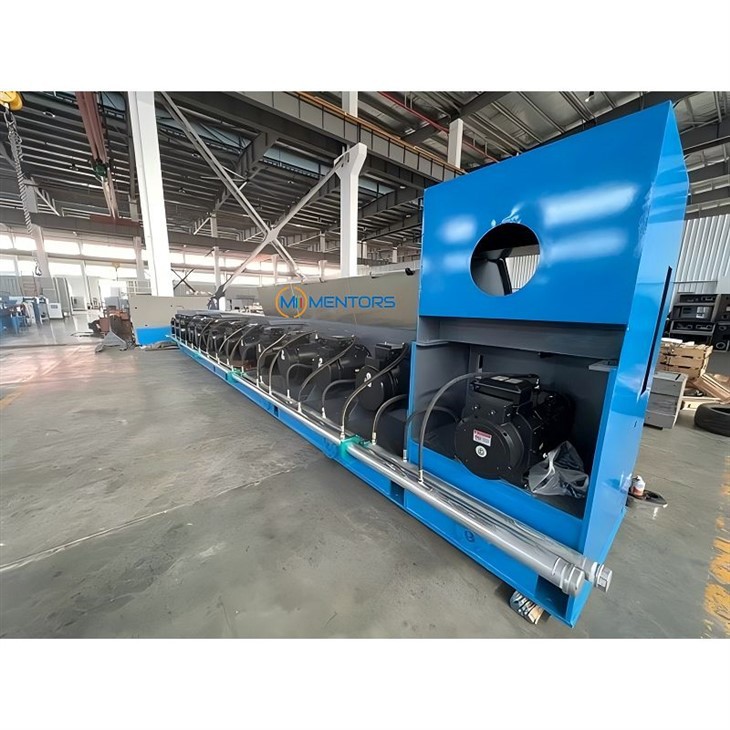

Annealing units are used to heat - treat the wire during the drawing process. Annealing helps to relieve internal stresses in the wire, improve its ductility, and enhance its mechanical properties. By annealing the wire at appropriate intervals during the drawing process, we can produce high - quality wires with the desired mechanical characteristics.
Quality inspection devices, such as diameter gauges and surface inspection cameras, are used to monitor the quality of the drawn wire in real - time. These devices can detect any defects or deviations from the required specifications, allowing for immediate corrective action to be taken.
As a fine wire drawing machine supplier, we offer a range of high - quality machines that are designed to meet the diverse needs of our customers. Our machines are equipped with the latest technology and the best - quality components to ensure reliable performance and high - quality output. If you are in the market for a fine wire drawing machine, we have a variety of options to choose from, including the Two Wires Aluminum Alloy Rod Breakdown Machine, the Wire Rod Drawing Machine, and the Wire Drawing Machine For Aluminium.
We understand that every customer has unique requirements, and our team of experts is ready to work with you to find the best solution for your wire drawing needs. Whether you are looking to produce fine wires for the electronics industry, the automotive industry, or any other application, we can provide the right machine and support. Contact us to start a discussion about your wire drawing requirements and explore how our fine wire drawing machines can help you achieve your production goals.
References
- Groover, M. P. (2007). Fundamentals of Modern Manufacturing: Materials, Processes, and Systems. Wiley.
- Totten, G. E., & MacKenzie, D. E. (2003). Handbook of Aluminum: Physical Metallurgy and Processes. CRC Press.
- Kalpakjian, S., & Schmid, S. R. (2013). Manufacturing Engineering and Technology. Pearson.


