

The drawing process in a fine wire drawing machine is a critical manufacturing step for producing high - quality fine wires used in various industries such as electronics, telecommunications, and automotive. One of the key factors that significantly influence this process is the hardness of the wire. As a supplier of fine wire drawing machines, understanding the impact of wire hardness on the drawing process is essential for both us and our customers to optimize production efficiency and product quality.
Impact on Drawing Force
Wire hardness directly affects the drawing force required during the wire - drawing process. Harder wires have a greater resistance to deformation. When a wire with high hardness passes through the die of a fine wire drawing machine, a larger force is needed to reduce its cross - sectional area. This increased drawing force can put more stress on the machine components, such as the dies, capstans, and drive systems.
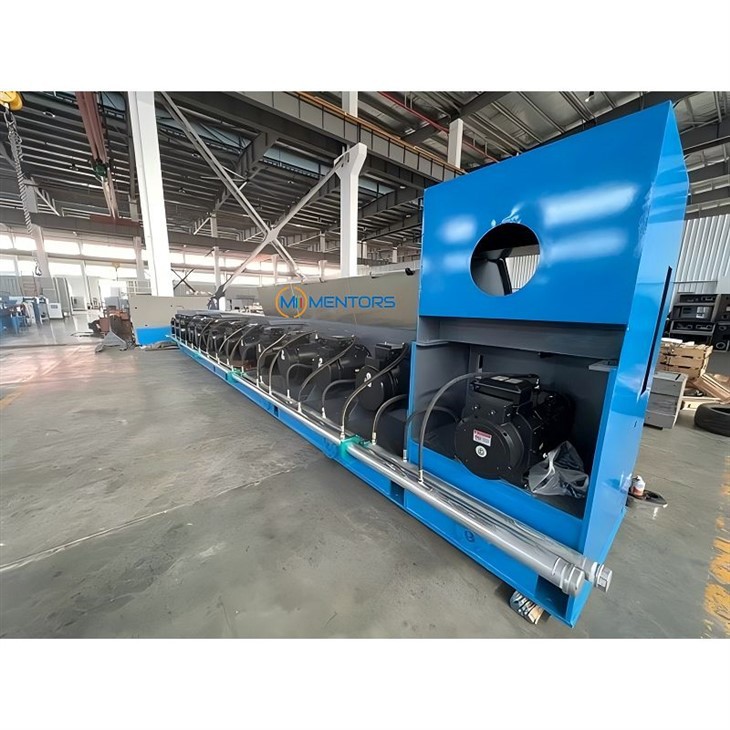
For example, if we consider a copper wire with a relatively low hardness and an aluminum - alloy wire with a higher hardness. The copper wire will require less force to be drawn through the die compared to the aluminum - alloy wire. This means that the fine wire drawing machine has to work harder when processing harder wires. Over time, the excessive drawing force can lead to accelerated wear and tear of the machine parts. The dies, which are in direct contact with the wire, are particularly vulnerable. The high pressure exerted during the drawing of hard wires can cause the die surface to wear unevenly, resulting in a decrease in the quality of the drawn wire and an increase in the frequency of die replacement.
Effect on Surface Quality
The hardness of the wire also has a profound impact on the surface quality of the drawn wire. Harder wires are more prone to surface defects during the drawing process. When a hard wire is forced through the die, there is a higher chance of scratches, cracks, or other surface irregularities. This is because the hard wire may not deform smoothly, and the friction between the wire and the die can be more severe.
In contrast, softer wires are more malleable and can conform to the shape of the die more easily, resulting in a smoother surface finish. For instance, when drawing a soft - annealed copper wire, the surface of the drawn wire is likely to be shiny and free of major defects. However, if the same machine is used to draw a hard - tempered steel wire, the surface may show signs of micro - cracks or rough patches. These surface defects can be a major issue, especially in applications where the wire's electrical conductivity, corrosion resistance, or aesthetic appearance is crucial.

Influence on Dimensional Accuracy
Dimensional accuracy is another important aspect affected by wire hardness. Harder wires are more difficult to draw to precise dimensions. Due to their high resistance to deformation, it is challenging to control the reduction in cross - sectional area accurately. During the drawing process, the wire may not deform uniformly, leading to variations in the diameter along the length of the wire.
For example, in a fine wire drawing machine, the dies are designed to reduce the wire diameter by a specific amount. When drawing a hard wire, the actual reduction may deviate from the intended value. This can result in wires that do not meet the required specifications. In industries where precision is of utmost importance, such as the manufacturing of micro - electronics, these dimensional inaccuracies can render the wires useless. Softer wires, on the other hand, are more forgiving and can be drawn to more accurate dimensions with less effort.
Impact on Drawing Speed
Wire hardness also plays a role in determining the drawing speed in a fine wire drawing machine. Harder wires generally require a slower drawing speed. This is because at higher speeds, the increased friction and force associated with drawing hard wires can lead to even more severe surface defects and dimensional inaccuracies.
When drawing a hard wire at a high speed, the wire may experience excessive heating due to the increased friction. This heating can cause changes in the wire's microstructure, further affecting its mechanical and electrical properties. In addition, the high - speed drawing of hard wires can put additional stress on the machine, increasing the risk of mechanical failures. For softer wires, the drawing speed can be relatively higher without significant negative impacts on the wire quality or the machine's performance.
Solutions and Considerations for Different Wire Hardness
As a supplier of fine wire drawing machines, we understand the challenges posed by different wire hardness levels. For customers dealing with harder wires, we recommend using dies made of high - performance materials. For example, tungsten carbide dies are known for their high hardness and wear resistance, making them suitable for drawing hard wires. These dies can withstand the high forces and friction associated with hard - wire drawing, reducing the frequency of die replacement and improving the overall quality of the drawn wire.
We also suggest adjusting the machine settings according to the wire hardness. This includes optimizing the drawing force, reducing the drawing speed, and increasing the lubrication. Proper lubrication is crucial, especially for hard - wire drawing. A good lubricant can reduce the friction between the wire and the die, minimizing surface defects and heat generation.
In addition, for customers who need to draw wires with different hardness levels, our Aluminum Copper Wire Drawing Machine offers flexibility. This machine can be adjusted to accommodate various wire materials and hardnesses, allowing for efficient production of different types of wires.
Another option for our customers is the Two Wires Aluminum Alloy Rod Breakdown Machine. This machine is specifically designed for breaking down aluminum alloy rods, which often have different hardness levels. It can handle the challenges associated with hard aluminum alloy wires, ensuring a smooth and efficient drawing process.

Our Wire Line Drawing Machine is also a great choice for customers looking to draw wires with different hardnesses. It is equipped with advanced control systems that can adjust the drawing parameters based on the wire properties, ensuring high - quality wire production.
Conclusion
In conclusion, wire hardness has a significant impact on the drawing process in a fine wire drawing machine. It affects the drawing force, surface quality, dimensional accuracy, and drawing speed. As a fine wire drawing machine supplier, we are committed to providing our customers with the best solutions to overcome the challenges associated with different wire hardness levels. Our range of machines, including the Aluminum Copper Wire Drawing Machine, Two Wires Aluminum Alloy Rod Breakdown Machine, and Wire Line Drawing Machine, are designed to handle various wire materials and hardnesses.
If you are in the market for a fine wire drawing machine or have any questions about the impact of wire hardness on the drawing process, we encourage you to contact us for more information and to discuss your specific requirements. Our team of experts is ready to assist you in finding the most suitable machine for your production needs.
References
- Callister, W. D., & Rethwisch, D. G. (2011). Materials Science and Engineering: An Introduction. Wiley.
- Dieter, G. E. (1986). Mechanical Metallurgy. McGraw - Hill.
- Kalpakjian, S., & Schmid, S. R. (2009). Manufacturing Engineering and Technology. Pearson.