


Hey there! As a supplier of ABS plastic spools, I often get asked whether these spools have a high - precision structure. Well, let's dive right into it and find out.

First off, what is an ABS plastic spool? ABS, or Acrylonitrile Butadiene Styrene, is a common thermoplastic polymer known for its toughness, rigidity, and good chemical resistance. ABS plastic spools are used in a variety of industries, from the wire and cable industry to the textile industry. They're designed to hold and dispense materials like wires, threads, and fibers.
So, do they have a high - precision structure? The answer is a resounding yes, and here's why.
Manufacturing Process
The manufacturing of ABS plastic spools involves a high - precision injection molding process. Injection molding is a manufacturing technique where molten plastic is injected into a mold cavity under high pressure. This process allows for the creation of parts with extremely precise dimensions.
The molds used to make ABS plastic spools are crafted with great care. They're designed to meet very tight tolerance levels. Tolerance is the amount of variation allowed in the dimensions of a part. For ABS plastic spools, the tolerance levels can be as low as a few thousandths of an inch. This means that every spool produced is almost identical in size and shape, which is crucial for applications where consistency is key.
Design Considerations
The design of ABS plastic spools also contributes to their high - precision structure. These spools are engineered to have smooth surfaces and well - defined edges. The smooth surfaces ensure that the materials being wound around the spool can move freely without getting snagged or damaged.
Moreover, the flanges of the spool, which are the rims on either side, are designed to be perfectly parallel and perpendicular to the spool's axis. This precise alignment is essential for proper winding and unwinding of the materials. If the flanges are not parallel or perpendicular, the material may not wind evenly, leading to issues like tangling or uneven tension.
Quality Control
At our company, we have a strict quality control process in place to ensure that every ABS plastic spool we produce meets the highest standards of precision. We use advanced measuring tools like calipers, micrometers, and coordinate measuring machines (CMMs) to check the dimensions of the spools.
CMMs are particularly useful as they can measure the spool's dimensions in three - dimensional space with extremely high accuracy. Any spool that does not meet the specified tolerance levels is rejected. This rigorous quality control ensures that only spools with a high - precision structure make it to the market.
Applications Requiring High Precision
There are many applications where the high - precision structure of ABS plastic spools is crucial. In the wire and cable industry, for example, the spools are used to wind and store wires. The precise dimensions of the spool ensure that the wires are wound evenly, which is important for maintaining the integrity of the wire during storage and transportation.
In the textile industry, ABS plastic spools are used to hold threads. The high - precision structure of the spool ensures that the threads can be unwound smoothly during the weaving or knitting process. This helps to improve the quality of the final textile product.
Comparison with Other Spool Materials
When compared to other spool materials, ABS plastic spools often offer better precision. For example, wooden spools can be subject to warping and shrinkage due to changes in humidity and temperature. This can lead to variations in the spool's dimensions over time.
On the other hand, High Speed Steel Spool are generally more expensive and may not be as suitable for applications where a lightweight spool is required. ABS plastic spools offer a good balance of precision, cost - effectiveness, and lightweight properties.
The Role of Complementary Equipment
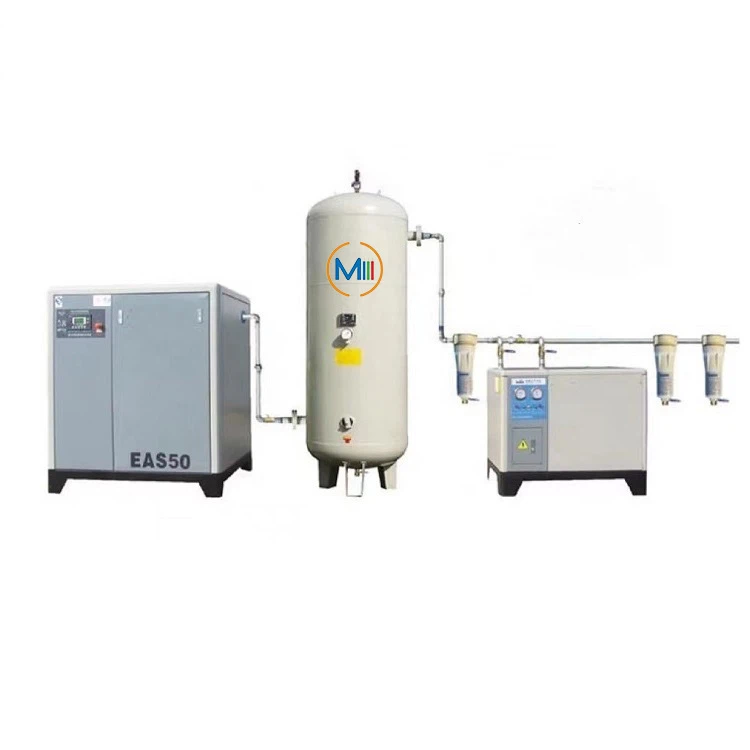
In addition to the spools themselves, complementary equipment also plays a role in the overall precision of the system. For instance, an Air Compressor For Wire Drawing is often used in the wire drawing process. A high - quality air compressor can ensure a consistent flow of air, which is important for maintaining the tension and alignment of the wire as it is wound onto the spool.
Similarly, a Water Cooling Tower can be used to cool the wire during the drawing process. Proper cooling helps to prevent the wire from overheating and deforming, which in turn contributes to the overall precision of the winding process.
Conclusion
In conclusion, ABS plastic spools do have a high - precision structure. Their high - precision injection molding process, careful design, and strict quality control all contribute to their accuracy. Whether you're in the wire and cable industry, the textile industry, or any other industry that requires the use of spools, ABS plastic spools are a great choice.
If you're interested in purchasing high - precision ABS plastic spools for your business, we'd love to hear from you. Feel free to reach out to us to start a procurement discussion. We can provide you with more information about our products, pricing, and delivery options. Let's work together to find the perfect spool solution for your needs.
References
- "Plastics Technology Handbook" by Myers, Charles L.
- "Injection Molding Handbook" by Rosato, Dominic V.
- Industry reports on wire and cable manufacturing and textile production.


